
Peppe
A work journal
that asks for the numbers
I built Peppe to turn a weekly conversation into a record of what I did, what I delivered, and what changed because of it. It gives me a history I can actually use when it’s time to update my CV.
See how Peppe works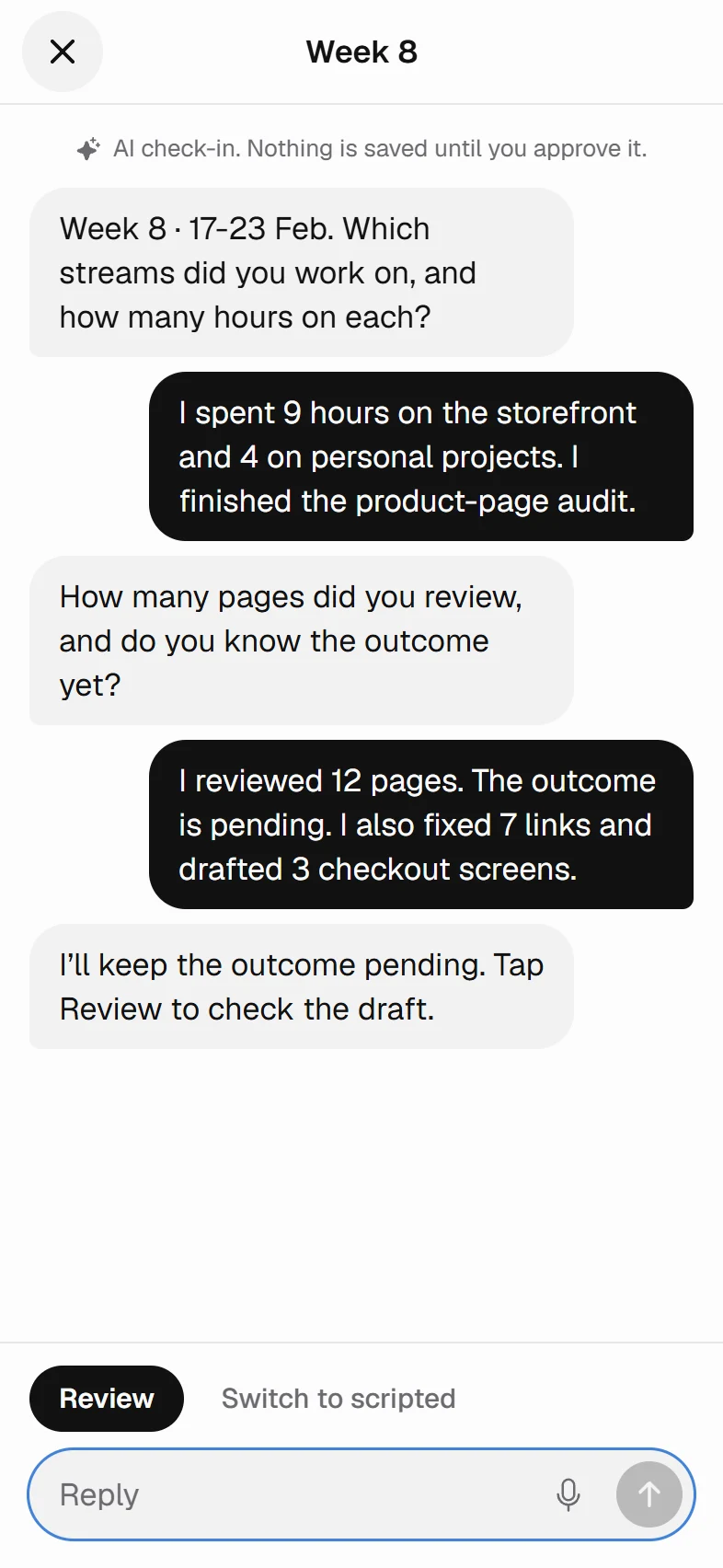

- Project
- Personal work journal
- My role
- Client, Developer, Tester and User
- Built with
- Claude Code · Next.js · Postgres · Claude API · ElevenLabs
I kept rewriting the same work history
Every time I updated my CV or applied for a job, I had to reconstruct months of work. Which projects had I worked on? What had I delivered? Could I still remember the numbers? Then I’d explain it all to an AI assistant and start from scratch the next time I needed that context.
I tried Notes and shared Word documents first. They gave me somewhere to write, but I still had to remember to open them, work out what was worth recording, and notice when I’d left out a result. I wanted a tool that would remind me to check in and ask a follow-up when my answer was too vague.
I designed the check-in around the questions I usually forgot to ask
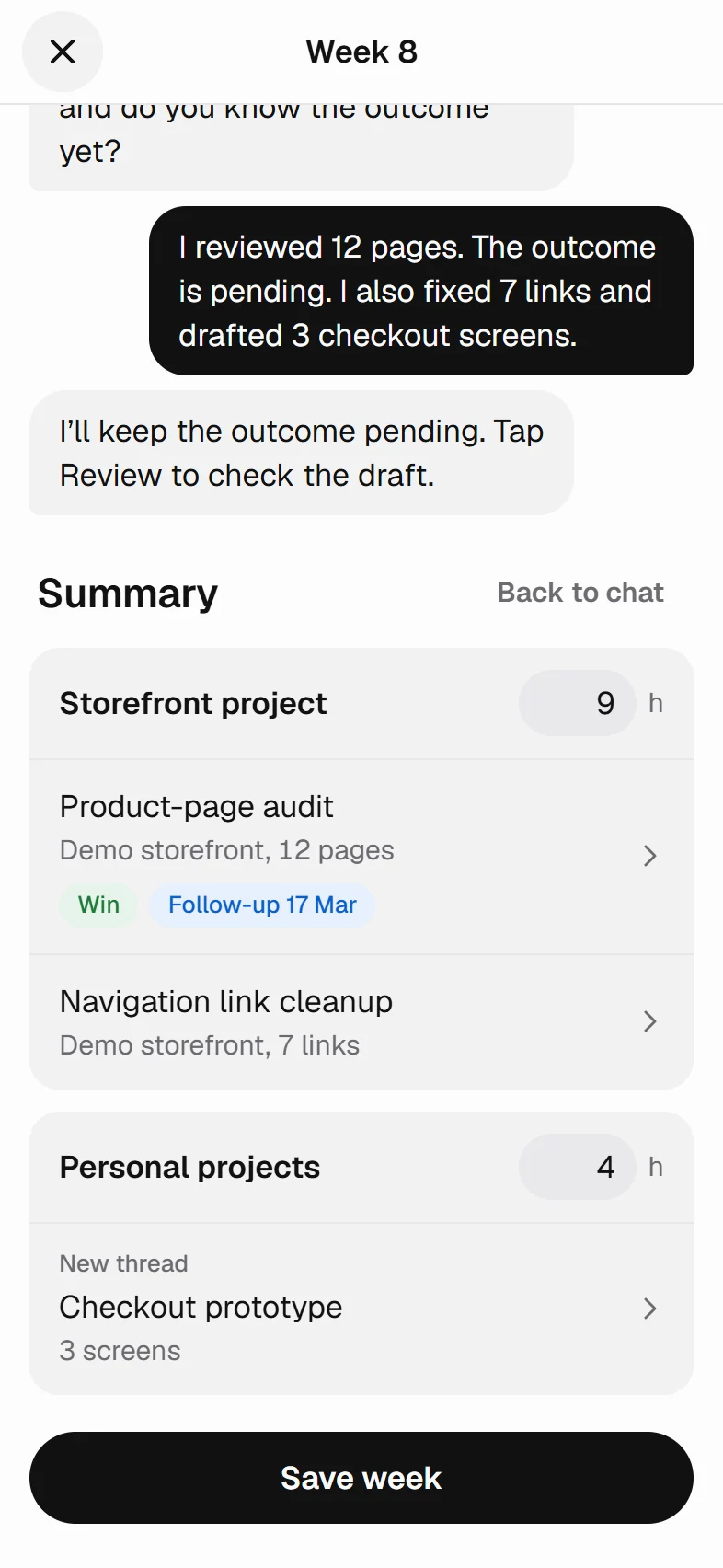
I defined what a useful work record needed to capture, shaped the weekly check-in, and used Claude Code to build Peppe. Trying it on my own phone helped me see where the flow got in the way. The dashboard gave me a place to go back through my work. The check-in gave me a way to collect the details while I still remembered them.
What I changed after testing Peppe
Notes and Word to
I built a guided check-in
- What did I work on?
- What did I deliver?
- What changed?
When I tried logging my week in Notes and Word, it was easy to leave out what I’d delivered or what changed. I built those questions into Peppe’s weekly check-in.
Fixed questions to
I made Peppe follow up
Is the result in yet?
- Yes
- Record it
- Not yet
- Follow up later
Testing the first version showed me that the same questions didn’t fit every week. I made Peppe ask for missing details and follow up later when I didn’t know the result yet.
Typing only to
I added dictation
- Talk through the week
- Edit the transcript
- Send when ready
When I tested Peppe on my iPhone, some tasks were easier to explain out loud. I added dictation so I could talk through the week and edit the transcript before sending it.
From a Sunday conversation to a record I can reuse
Peppe reminds me to check in. I type or dictate what I worked on, and it follows up on the details I might leave out.
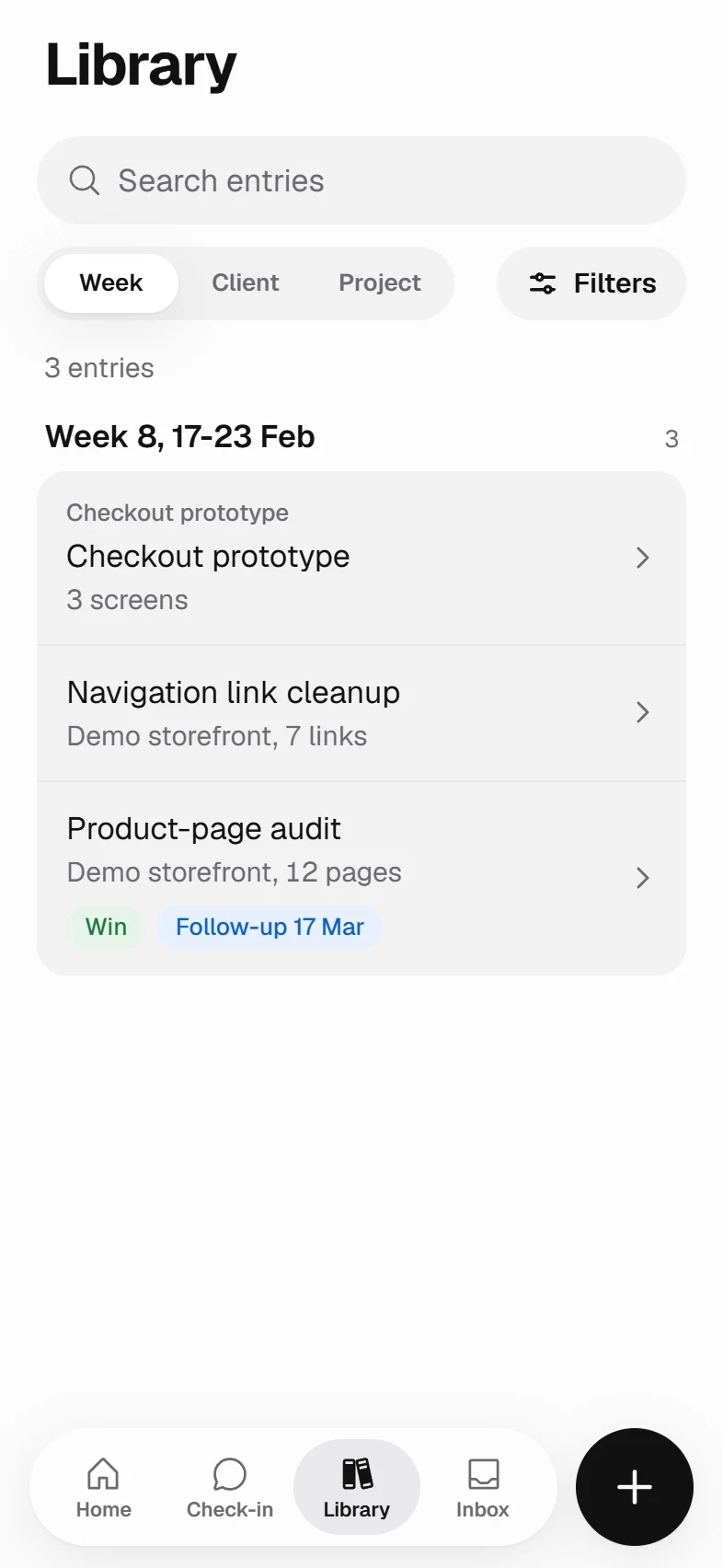
I review the entries, save the week, and can find them again in my work history.
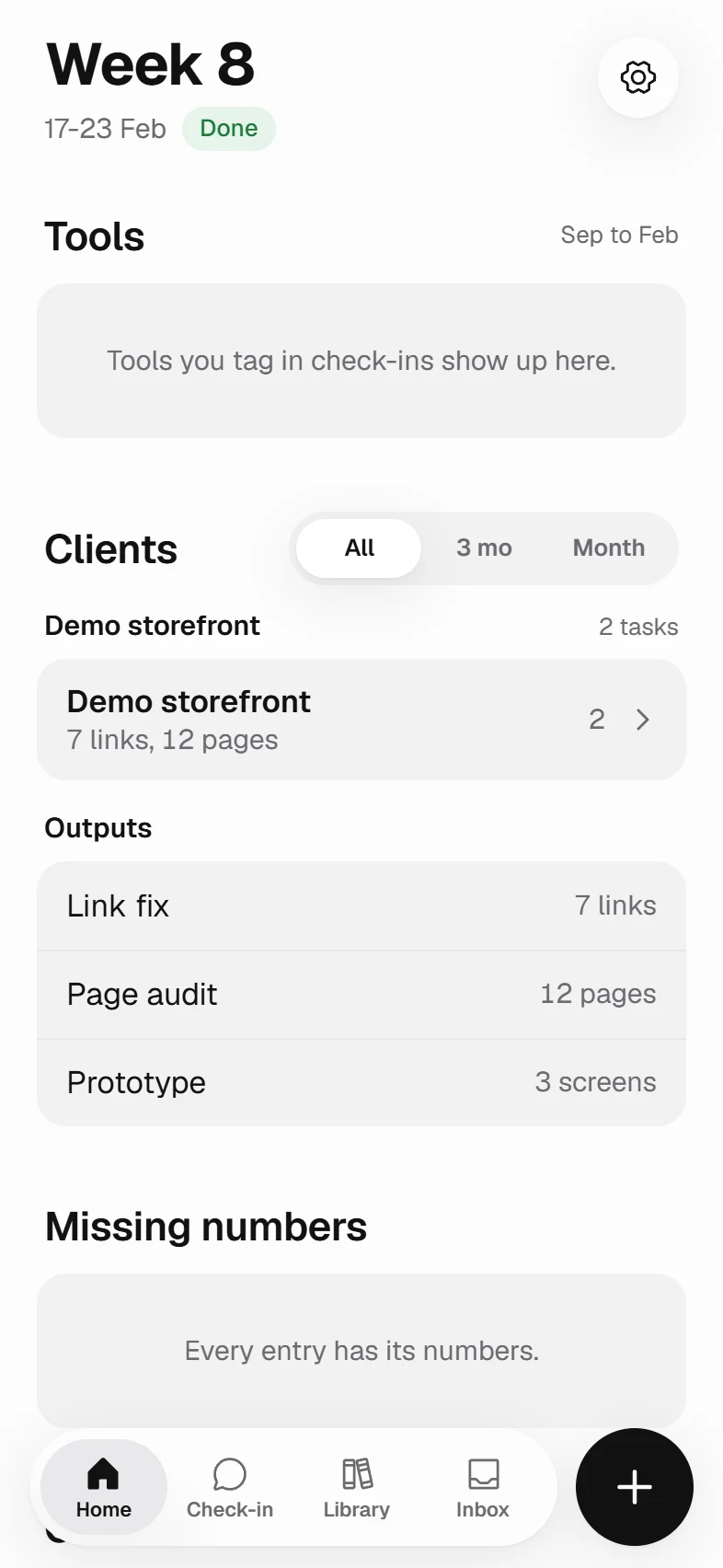
A nightly Markdown export makes that history readable outside the app. My Second Brain draws on those records, so my AI assistants can work with context I’ve already captured, including work I did away from an AI chat.
Inside Peppe
Postgres recordthenMarkdown export
Downstream use
Second BrainthenAI assistants
Months of work, ready for my CV
The next time I rewrote my CV, I opened Peppe and looked back several months. The work I’d done, what I’d delivered, and the outcomes I could put a number on were already in one place. I could bring those same details into an AI conversation.
- Projects I worked on
- What I delivered
- Outcomes I could measure
Ask for the evidence
while the work is still fresh.
By the time I’m writing a CV, the hard part should already be done.